Win a bottle of wine


Sunday, 7 April 2013

Tour de Champagne - April 2013

Champagne - does any other beverage evoke a moment in time, a feeling, or that special place? I think not. Here is a little insight into some gems for our two day tour of the champagne region. There are 319 villages in Champagne with 17 Grand Cru and 41 Premier Cru sites, so this is really only a small glimpse… but here are some little beauties worth noting!

BRUNO PAILLARD - Montagne De Reims

Amazing to meet Alice Pallaird, daughter of Bruno and part of the 32 staff who work for her father. This is considered a smallish and relatively young ‘house’, making between 400,000 and 500,000 bottles a year.  Their largest export markets are Japan and Great Britain. Known for their ‘mult-vintage’ wines and for using different artists to complement their vintage range labels. Bruno wanted to add personality to the vintages but express their nature on the bottle labels. Basically artists are given two words that relate to the vintage (ie ‘structure’ and ‘velvet’ in 1996) and they are asked to submit works based on this.

The multi-vintage selection from Bruno Paillard
MV Bruno Paillard Première Cuvée Brut
Made from the traditional varieties, with Pinot Noir winning the race out of the three with a 45% make up of the blend.. a wine that teases the palate with excellent balance and power – hints of toastiness, honeysuckle, and citrus (lime) with dry but textured finish. Spends 3 years on lees with 6 g/l dosage.

MV Bruno Paillard Première Cuvée Rosé
Has always been a crowd charmer at ARIA Sydney. Mostly made up of pinot noir (percentage undisclosed) and from 12 vineyards. Dosage also 6 g/l with high toned acidity and red currants being the flavour of the day.

MV Bruno Paillard ‘Reserve Primee’ Blanc de Blancs
From three terroirs, spends 4 years on lees with aromas of white flowers, fresh almond and tangerine. Tightly built and fine bubbles.  For me, the complete aperitif.  Gets you salivating!

JEAN LALLEMENT – Verzenay in Montagne de Reims
The selection from Lallement
We were treated to some excellent hospitality by Alexandra Lallement and it was an honour to try their range of wines. The production is tiny with about 25,000 bottles per year made, 80% of which is exported.  The ‘grand cru’ village of Verzenay produces pinot noir with incredible perfume but has more elegant result on the palate when compared to the wines from Ambonnay. Alexandra’s husband, Jean-Luc is at the helm and all the base wines undergo malolactic fermentation. These were wines with great personality and which scream of their origin.
NV Jean Lallement Brut Tradition (80% Pinot Noir & 20% Chardonnay)
Rich and toasty with brioche and baked pastry notes upfront.  Then later comes the liquorice and fennel seed hit with fresh almonds and hints of nougat.  6 g/l of dosage so pretty dry but delectable and artisian.

NV Jean Lallement Brut Reserve (80% Pinot Noir & 20% Chardonnay) 
From vieilles vignes (old vines between age of 35 and 45 years).  Drier than the Brut Tradition with 4 g/l of dosage, some more savoury notes with pine needles, citrus and bracing mineral notes.

NV Jean Lallement Rosè (100% Pinot Noir from 2009 Harvest)
100% pinot noir assemblage – all from Grand Cru sites. A much more serious style that would hold up well into main course territory for food and wine matches - riper red currants and cherry notes. Dosage of 4 g/l keeps it nice and tense.

MICHEL ARNOULD  -  Verzenay in Montagne de Reims
Up the hill we went (5 minutes) to visit Patrick Arnould, a humble man with an incredible passion to produce wines of personality and quality. He makes about 100,000 bottles a year and owns 12 hectares, 95% of which are also in Verzenay. His pinot noir from the village has a northern exposure thus giving it a certain ‘lightness’ in the mouth. There is consistency throughout the whole range with a super fine bead and elegance. Solid stuff!


NV Michel Arnould Brut Reserve
NV Michel Arnould Brut Reserve (70% Pinot Noir & 30% Chardonnay)
Clean, fresh, immediately appealing with 10 g/l dosage and aged for 2-3 years before disgorging. Crisp minerality so defined with citrus and hint of nectarines.

NV Michel Arnould Grande Cuvée (70% Pinot Noir & 30% Chardonnay)
Some more exotic notes with lovely crisp minerality and drive.  Slightly deeper than the Brut Reserve but the acidity keeps everything in harmony (9 g/l dosage).

2007 Michel Arnould ‘B-50’ (50% pinot & 50% chardonnay)
This wine has not been released yet so was a real privilege to so how it is embracing its journey in the bottle.  It is fermented in 2-3 year old burgundy oak and does not go through any malolactic fermentation. Loved the ‘vinous’ appeal this wine had and Patrick has had a mixed response to it so far.  Thumbs up from us… definitely a main course wine and not for the faint hearted.
NV Michel Arnould Brut Rosé (100% pinot noir from Grand Cru vineyards)
Ripe raspberry fruits with sour cherry, sweet candy cane and sherbet.. quite a powerful entry but streamlined enough for dry finish. 9 g/l dosage
 R & L LEGRAS – Chouilly in the Côtes des Blancs

2004 R & L Legras‘Presidence’ Vieilles Vignes’
Chef de cave Julien Barbier is going to be a superstar.  From the winery, to the fit out, to the end result in the bottle… there is so much going on here. Plus there is an important link with gastronomy as they sell 80% of their wines to restaurants.  Places such as Guy Savoir and La Tour d’Argent  in Paris are high-profile examples of restaurants that use their own label in conjunction with this producer.  Julien states they make 150,000 bottles on average per year and his passion for the Chardonnay dominant Champagnes from here is evident.  In his words: “Chardonnay from Chouilly is good young or old - there is a high level of natural acidity”.
NV R & L Legras Blanc de Blancs (100% Chardonnay)
High toned acidity, with lemon citrus, white flowers and a super dry finish (dosage 7 g/l). Lightness and elegance are the theme here.

2004 R & L Legras ‘Presidence’ Vieilles Vignes’ (100% Chardonnay)
Toasty brioche aromatics with baked brioche and toasted almonds but then fresher notes of young grapefruit and lime zest.

NV R & L Legras Rosé (85% Pinot Noir & 15% Chardonnay)
Subtle expression of pinot noir from Ambonnay with chardonnay kick and 7 g/l of dosage.

1996 R & L Legras ‘Saint-Vincent’ (100% Chardonnay)               
This was the standout Champagne from our visit.  Yes I know it’s from 1996, one of the best vintages of all time, but it was compelling and spell binding. Things like orange rind, almonds, hazelnuts all came through with incredible balance and poise. Could drink it all day – no problem!

GUY CHARLEMAGNE – Les Mesnil-Sur-Oger

It may be located just across the road from the exclusive ‘Salon’, but this Champagne house has remarkable personality in its own right.  Located in the heart of the Côtes des Blancs, their vineyards total 15 h.a and the grapes are essentially chardonnay (87%) and the rest made up of pinot noir. Production is around 130,000 bottles a year of which 70% is exported.  They also have vineyards in Sézanne. Sales manager Elodie Caraskakis took us through the range.
  
Old versus New labels
NV Guy Charlemagne Brut Nature (70% Chardonnay & 30% Pinot Noir)
This is their ‘no sugar’ example from the chalky soils of Sézanne.   It is vinified in termo regulated stainless steel.  Fresh but ripe… got some hints of green olive, white flowers and grapefruit.

NV Guy Charlemagne Brut Classic (80% Chardonnay & 20% Pinot Noir)
Powerful nose of ripe summer fruit (cherry plum). Smooth entry on the palate with pear and mandarin character with soft, dry but long finish. 8 g/l dosage.

NV Guy Charlemagne Brut Rosé (100% Pinot Noir)
Terroir in Sézanne is dominated by chalk and clay and the result here is a more masculine style and a strongly coloured wine. Riper dark berry fruits shine here (blackberries and kirsch).. strawberry jam on the mid palate but dry, opulent finish. 8 g/l dosage.

NV Guy Charlemagne ‘Reserve’ Brut Blanc de Blancs (100% Chardonnay)
From vineyards in Mesnil sur Oger and Oger with limestone soil, High-toned acidity, super dry with green olive and some more complex candied fruit notes (pineapple and angelica). 6 g/l dosage.

 HENRIET-BAZIN – Premier Cru & Grand Cru from Villers-Marmery

Henriet-Bazin.  You know you’re enjoying things when you walk out after two hours and it felt like 10 minutes!  From the get-go it was evident how much passion and pride are put into their wines and how excited they are about what they do – rightly so. For every Champagne we tasted Marie-Nöelle had in-depth descriptions of food matches.  For someone to be obsessed with this as me it was 7th heaven, and to hear her different take on things was both enlightening and an inspiration to push the envelope.

We were shown examples of terroir and for the east exposed village of Villers-Marmery, it is made up of gravely chalk, crushed little rocks, so the roots are able to go deep, giving pure expressions.  Bottles produced here range from 55,000 to 60,000 bottles a year.  They are located in La Grande Montagne de Reims but they also own vineyards in Verzenay and Verzy.

NV Henriet-Bazin Cuvée Sélection de Parcelles Brut
NV Henriet-Bazin Blanc de Noirs Extra Brut (100% Pinot Noir from Verzenay & Verzy)
Lots going on here with red apple, white pepper and then on the palate there is toasted bread, brioche and pineapple. 5 g/l dosage and 100% from 2008 harvest – super fresh with high-toned acidity.

NV Henriet-Bazin Blanc de Blancs Brut (100% Chardonnay from Villers-Marmery)
This is the ‘postcard’ wine of Villers-Marmery.. or as Nicolas puts it: “the little island of chardonnay in an ocean of pinot noir”.  Things like liquorice, lemon verbena and honeysuckle dazzle the palate.. creamy effervescent finish with excellent lemony acidity and mineral freshness. 8 g/l dosage.

NV Henriet-Bazin Cuvée Sélection de Parcelles Brut (50% Pinot Noir & 50% Chardonnay)
‘Fresh and mature’ are two words that sum up this wine.. honeysuckle, lime and pistachio on the nose and then on the palate there are crystallized fruits with exotic acacia honey and star anise. 8 g/l dosage and 70% coming from the 2007 harvest, and 30% of reserve wine.

2006 Henriet-Bazin ‘Grand Cru’ Brut (65% Pinot Noir & 35% Chardonnay)
Fresh mint and garden herbs on the nose and then on the palate there is spicy notes and some denser yellow fruits (preserved peach) with cinnamon and hints of toasty almonds.  Marie Nöelle  and Nicolas relate the ‘almond’ characters to be linked with the minerality in the soil. 8 g/l dosage from the fruity 2006 vintage.

NV Henriet-Bazin Rosé Brut ‘Grand Cru’ (50% Chardonnay & 50% Pinot Noir)
Do you like a more ‘vinous’ style of Rosé? Then this is for you as it includes 19% of red wine made by them, using the wine issued from maceration!  Fruity and concentrated nose with morello cherry, black pepper and clove.. Then creamy palate with dark red and black fruits shining.. blackcurrant, kirsch.  A trademark of this range is the lemony acidity and this still comes through here, which keeps everything fresh. Sensual and homogenous! 8 g/l dosage.

TO WRAP IT UP:
 
Best champagne tasted: 
1996 R & L Legras ‘Saint-Vincent’ Brut, Chouilly
 
Most exciting food & wine match:
NV Henriet-Bazin Blanc de Noirs Brut and quail breast with caramalized apple & mushroom risotto.

Best dining ‘experience’:
L’assiette de Champenoise in Reims – worthy of its 2 Michelin Stars and what a wine list! All pages meticulously maintained and attention to detail oustanding.

Best dish at L’assiette de Champenoise:
Foie gras du Perigord – shaved pheasant foie gras with sour cherries.
 
Melt in your mouth
Trends/Fashion:
In a nutshell most producers we spoke to this trip have seen in increase in Blanc de Noir sales and a decrease in Rosé popularity.  Zero dosage wines (no sugar added) are on the up in popularity but consumers seem to have a love-hate relationship with them.  So in essence most of these trends are in line with Australia except I would be interested to know how Rosé is fairing at home as from my end they seem to sell quite well at the moment, compared to a couple of years ago. Overall Australians are drinking more bubbly helped by the strong Aussie dollar driving shelf prices down. New figures from France's Champagne Bureau show Australia imported 4.862 million bottles in 2011, an increase of almost a third. America and Japan are other big movers in Champagne sales.

From a service end, a lot of restaurants/bars are moving away from serving Champagne in traditional flutes.. and the following type of white wine glass is being presented... bravo to that!
 
The move away from traditional flutes


Thursday, 6 December 2012

My Best find for 2012 - High Altitude Sparkling

                                                                                                                                                                                                         
2008 Courabyra '805' Sparkling, Tumbarumba NSW ($45)

Are you a thrill seeker? Like things from a high altitude? From colour to aroma, to flavour and the story... this sparkling wine has it all! It ticks all the boxes and we've had a wonderful response to it being poured by the glass at ARIA Sydney.  It has been refreshing to find a wine with solid consistency and vibrancy of fruit.

It all started in April this year when I visited Eden Road winery in Murrumbateman for a Tumbarumba Workshop and International benchmark tasting.  Amongst other great wines that day, I tried the 2001 Courabyra '805' Sparkling from Tumbarumba.  I fell in love with this wine.   A few months later I tried the 2008 and haven't looked back since.  I've written about wines tasting better when consumed in their own territory.  Courabyra sparkling wines taste great at their origin but they also taste delicious when consumed from far away.

Courabyra means 'pleasant place, family gathering' in Aboriginal.  It is a sub-region that sits about 6km north of Tumbarumba, and is located 730 metres above sea level in the foothills of the Snowy Mountains, near Australia's highest peak Mount Kosciuszko.  Wines from this sub-region typically produce styles that are high in natural acidity and minerality.  The other sub-region of Tumbarumba is Maragle which is south and lower altitude, producing more textural wines with upfront fruit character.

Courabyra wines is the project of Brian and Cathy Gairn who established the vineyard site in 1993. The logo has been designed around the family theme as Cathy is one of eleven children.  The circle in the middle of the logo represents one family member with ten siblings around the outside. The '805' refers to the vineyard address.


The 2008 is a blend of 62% pinot noir, 30% chardonnay and 8% pinot meunier.  The wine spent 3.5 years on lees and was disgorged in November 2011.  The sparkling base wine was put through malolactic fermentation.

Tasting notes: amazing light straw colour with aromas of pear skin, mineral and warm brioche.  Soft, creamy palate with citrus backbone and hints of red currants, gingerbread and figs. Dry finish.

Would go well with:  tuna sashimi & seaweed salad, BBQ snapper with mushroom risotto, gruyere or strong washed rind cows milk cheeses.

Tell your friends: Tumbarumba was named by the Wiradjuri people to mean 'Hollow Sounding Ground'.

Impress your friends:  serve this sparkling in a Riedel pinot noir glass if you are pairing it with a main course.  Being Pinot Noir dominant this will help bring out those red fruit flavours and will also soften the texture of the wine.  If you want to stick with a classy champagne flute then I'd recommend the brand Zalto from Austria (pictured below). They are mouth-blown, look amazing, plus they are lead oxide free which results in a lighter, more flexible glass. Best of all they are well priced. 


Zalto Champagne Flute
                       

To buy Courabyra:  Click here to get some bubbles for Christmas ($45 per bottle)! 

Hands down this is my best find for 2012 and without a doubt one of the finest producers of sparkling wine in Australia. Make your own mind up and try a bottle.


Wednesday, 12 September 2012

2011 Drake 'Samson' Pinot Noir, Yarra Valley - A wine by Matt Dunne

My first release - food-friendly pinot noir from a trio of single vineyards 


2011 Drake 'Samson' Pinot Noir, Yarra Valley Victoria
It's always been a dream of mine to get involved with producing a wine and last year I was excited to be given the opportunity.  The concept of the brand 'Drake' is about enjoying interesting wine with great food. 'Drake' is a male duck, which is the ultimate food match with pinot noir, whilst the name 'Samson' refers to two guys with plenty of curly hair, and a bit of flair!  Drake 'Samson' Pinot  Noir is a collaboration between the Yarra Valley’s Mac Forbes and myself (us of the curly hair).  2011 was a wet and cold vintage – a struggle for many. The wines I have seen so far are all lighter coloured styles but deceptively full flavoured.  I like the vintage for its approachability and elegance. They are wines to drink now but make your own mind up about the vintage as there are some good wines out there.

If you would like to try a bottle or 2 of Drake Samson, I've put details of how to order at the bottom of this post.
  
Why pinot?  I love the wines of Burgundy so traditionally that would mean I have a soft spot for the king and queen varieties... Pinot Noir and Chardonnay.  I also love Mac’s single vineyard wines as they speak of their origin in the Yarra Valley - a region I have always been a fan of.  Mac has a wealth of experience which also spans overseas where he makes wine in Austria every year. His attention to detail and respect of the fruit is shown strongly in his winemaking.  From my end I wanted to help create a wine to suit modern cuisine, something interesting to think and talk about but at the same time not being too serious. A wine to enjoy no matter what the season, but with a good story.


Foot stomping the Seville fruit

Drake Samson turns Mac’s normal individual vineyard philosophy on its head, blending from three vineyards to create a style perfect for modern Australian cuisine. Killara vineyard is located on the banks of the Yarra River in Seville. We tasted through rows of berries in the vineyard, the higher up the riper and fuller they tasted - overall 2011 fruit is  high in acidity with low sugars.  Killara in 'Seville' makes up 33.3% of this blend and this site is made up of hard duplex soil bringing perfume, freshness and red currant crunch. 16.7% of the blend comes from the 'Yarra Glen' vineyard which offers tannic profile and chalkiness and is an east facing vineyard with granite soil.  The third vineyard, 'Coldstream’, makes up most of the blend (50%) and is southwest facing, adding opulence and textural elements being a warmer site with greater sun exposure. Coldstream has grey loam soils overlaying clay and 13 year old vines.  The MV6 clone is in all three vineyards and this is the sole clone used for the Drake.

The wine was hand picked and the cold soak was at 7 degrees. It spent 10 days on skins and was fermented in small open fermenters.   Most of the fruit was destemmed, we used about 10% whole bunch. The purpose of using whole bunch is to trap perfume in the wine and to build some complexity. Primarily hand plunged and foot stomped before maturation in large French oak (Damy) with one quarter new. The wine was racked only once prior to bottling which was in March.


This year the 2012 vintage is looking really exciting and we are making a blend from two single vineyards - Coldstream and Seville.  Stay tuned for an update on how it's progressing, the wines are currently in barrel and have just finished malolactic fermentation.

Tasting notes for 2011:  Perfumed nose of sour cherries, cranberry and garden herbs and then a super light, nervy palate with spicy rhubarb, sweet raspberry and savoury tannin profile.  Light bodied, full flavoured with a long, firm and dry finish with tight acid structure. 

In the Mac Forbes Winery
Would go well with:  Warm duck salad with roasted beetroot, quinoa, green beans and pomegranate.  If you are into cheese I like this pinot with 'cloth aged' cheddar and quince paste. What is your favourite food match with pinot noir?

Tell your friends:  Pinot noir is one of the most versatile grape varieties on the planet.. serve it at room temperature or serve it slightly chilled to completely change its dimensions.

Quantity produced:  135 dozen

To order:  RRP  is $30 per bottle

1)   Order direct:  2 bottles for $60 | 6 bottles for $160 | 12 bottles for $280
       (All prices with free freight included)  
2)   Contact Nicholas Crampton at Fourth Wave Wine                 
       nicholas@fourthwavewine.com.au or Mobile: 0417 670 655

Thanks:  Big thanks to Mac Forbes, Nicholas Crampton, Tony Fikkers, Andrew Dunn, Aaron Woods & David Baxter for their efforts, patience and enthusiasm with this project.


Shot of the 2011 Fruit


Thursday, 26 April 2012

A Cabernet that is devilishly good!


This week at ARIA I sold two magnums of 1999 Domaine A Cabernet to a large table in for dinner. We sell these magnums for $495 a bottle. The wine is looking fantastic and reminded me I must share my earlier adventures to Tassie in 2012.

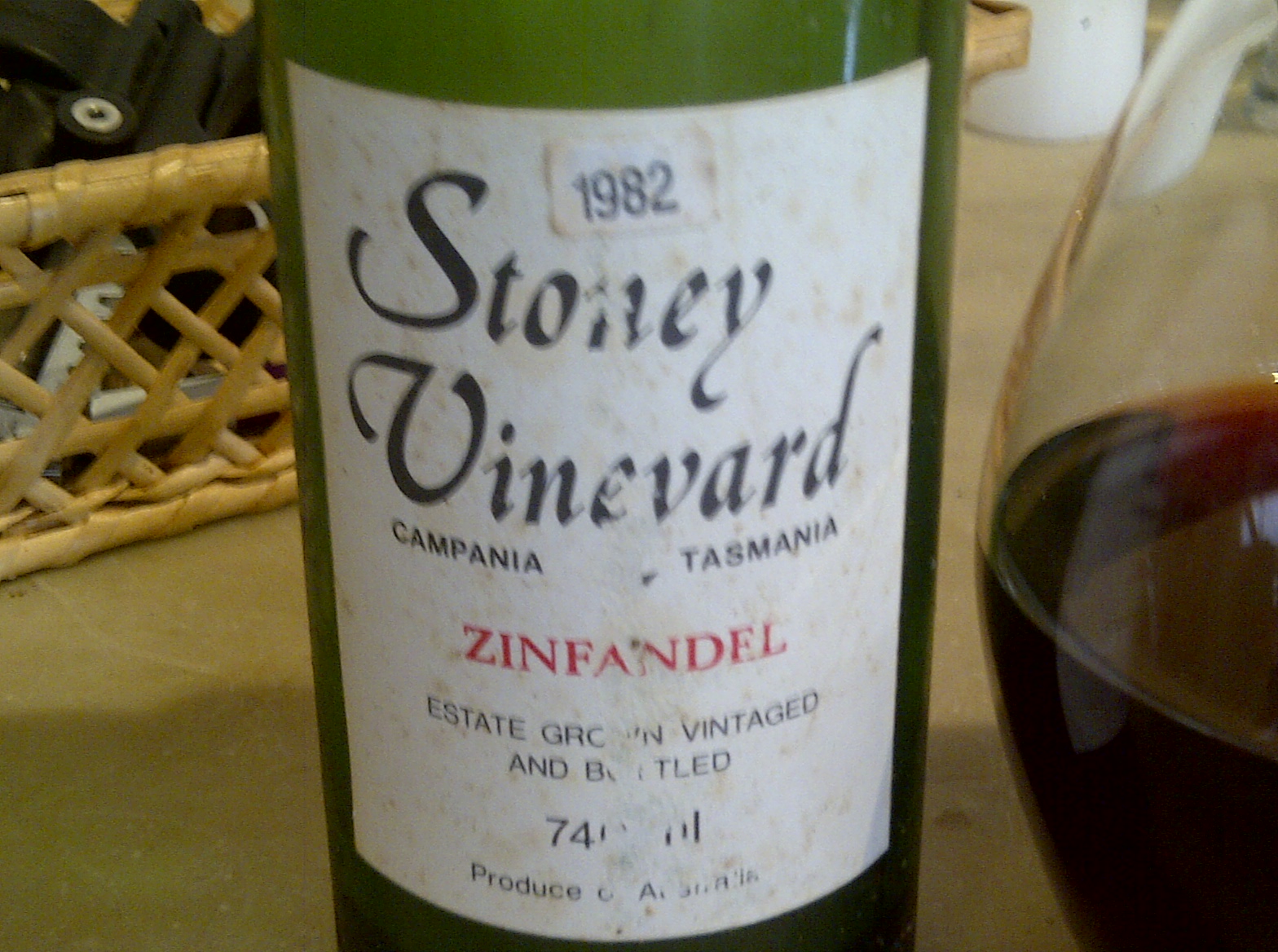
In February I had the opportunity to visit the Coal River Valley in Tasmania and in particular one of my all time favourite vineyards, Domaine A/Stoney Vineyard. The humble Peter and Ruth Althaus have owned the vineyard since 1989 and it's located about half an hour's drive north of Hobart. It was just by chance that I scheduled my visit an hour after Jancis Robinson MW (Master of Wine), who was in Tasmania and the keynote speaker for the 8th 'International Cool Climate Symposium'.

If your a Bordeaux fan you will love these wines... the 2006 Stoney Vineyard Cabernet Sauvignon by Domaine A is an affordable cabernet blend that hits the mark.. It's from vines planted in 1973 and is made up 90% Cabernet Sauvignon with 4% Cabernet Franc, 4% Merlot and 2% Petit Verdot. From a restaurant's point of view this is brilliant as being current release it has a few years bottle age on it (many current release wines need time in the cellar), it is good value for money and ready to drink now.  It's stated that this wine is one that's meant for short to medium term cellaring. Fair enough, but I reckon it would go a bit longer as it has excellent natural acidity, which is a hallmark feature of all the Domaine A/Stoney Vineyard wines.  They have a unique refreshing character on the palate which sets them apart.

Tasting notes:  vibrant nose of cassis, blackcurrant, dark cherries and eucalyptus. The palate is medium to full-bodied with ripe blackcurrants and dark chocolate. There are grippy tannins and the finish is intense with slight earthy, gamey characters and some delicate spice elements (sage and dried oregano).

Would go well with:  BBQ lamb cutlets marinated with olive oil, rosemary, sea salt and lemon zest. Serve it with a salad of white and purple cabbage, figs, walnuts, lots of fresh mint, balsamic and shaved parmesan.

Tell your friends: The Coal River Valley in Tasmania lies on the same latitude as Tuscany in Italy. 

To buyClick here to get your hands on a bottle of this tasty wine ($28 per bottle).

Stoney Vineyard used to produce a straight Zinfandel and how awesome it was to try the 1982 on this visit. Once again the acidity was still there and there was a delicate perfume with an interesting spicy, earthy red fruit base with leather and dried herbs on the back palate. Tassie reds can last the distance and this is a prime example of how well the Coal River Valley can tackle a late ripening variety such as Zinfandel.


Monday, 20 February 2012

Wine Myth Buster - Challenge Your Perceptions


What are your thoughts on the old saying of 'white wine with white meat' and 'red wine with red meat'?  Sure, there are some golden rules for food and wine matching and much can be said about that one combination you've had where everything worked in total unison and it took you to eternal bliss.

How do you feel about ordering wine before you order food? Will the kitchen be able to cope if they're a seafood restaurant and you want to drink blockbuster reds all night?  One restaurant in Paris that puts wine first is 'Il Vino d'Enrico Bernardo'. They create your dish once you order the wine!  Cool concept, very spontaneous and the creator is a trained chef who has also been crowned 'best sommelier in the world'. His name is Enrico Bernardo. Click here to check out his restaurant. 

Why not push the boundaries and challenge your perceptions when it comes to food and wine combinations?  You won't know until you try and that's half the fun! Here's some ideas to ponder:
  • Oysters natural with shallots, vodka & finger lime dressing - infuse a bottle of Belvedere vodka with the zest of 2-3 finger limes for 2 days. Finger limes are currently in season - don't use the pith as it will pollute the citrus infusion and I'd recommend straining out the zest once you are happy with the flavour. Keep in fridge and serve 30ml chilled with this dish for a refreshing match to get the palate going. Click here to grab a bottle of this Polish delight! ($59)
  • 'BBQ chicken with tabouli, creamed corn & roasted spuds' -  why not try a vintage beer? The 2011 Endeavour 'Reserve' Pale Ale is brewed just out of Sydney (Canyonleigh) and has the palate weight to pack a punch against this dish. There are three different types of hops used and the malty characters work a treat with the char of the chicken.  Click here to buy a case. ($69)
  • 'Crispy barramundi with mashed peas & braised fennel' - try a succulent pinot noir from a cool climate region such as the Canberra District. Nick Spencer is making some great wines down that way and his 2009 Eden Road 'The Long Road' Pinot Noir is vibrant and real winner with stronger, earthy fish such as barramundi. Click here to purchase. ($26 per bottle)
  • Veal schnitzel, cabbage salad & rosti - it's summer so why not venture down the Rosé path? A fresh, dry and more savoury style is recommended for this dish so I would suggest the biodynamic 2011 Krinklewood 'Francesca' Mourvèdre Rosé from the Hunter Valley. Click here to order some. ($25 per bottle)
  • Chocolate pudding with hazelnuts  - aged Sake works a treat with dark chocolate - the 1999 Chōkyū ‘Noble Brew’ Sake from Wagayama prefecture in Japan ($69 per bottle) is sherry-like and has amazing rancio and sesame aromatics with hints of caramel and toffee on the palate.  If you've never tried aged sake then what are you waiting for?  If you haven’t got a sweet tooth then it also works well with mushroom consommé.  Click here to grab some.
A glass of wine should be something you can enjoy with or without food.  Take it as seriously as you like but why not try out something new with your friends at home? I'm keen to hear about your favourite combinations or any new discoveries you might find.

Sunday, 5 February 2012

What to look for when ordering wine


So you're at a restaurant with some friends or business associates and want to choose a bottle of wine from the list.  Here's a few points to keep in mind:
  • First and foremost, don't be afraid to ask for assistance from the sommelier/wine staff.  Most restaurants with globe trotting lists, such as ARIA, have dedicated wine staff who's job it is to know the wine list inside out and be able to make recommendations.  Where possible be specific with your requests so you can get the best advice - do you want to enter the unknown, do you want to match wines to your meal, or can you suggest a favourite producer so the sommelier can get a feel for what style you like? 
  • If the restaurant has a website do some research on-line before you dine to get a heads up on prices and perhaps some bottles you might like to try.  Getting 'price-shock' when you look at the wine list on a date is never a good look!
  • Give the wine list and your guests equal but separate attention.  Especially with extensive wine lists, it's too easy to drift in and out and give neither the list or your guests the attention they deserve. Take five minutes to focus in on what wine(s) you want, so you can give your guests your undivided attention for the rest of the evening.
  • Wines by the glass are becoming increasingly popular and are a great way to try different styles without breaking the budget.  Plus, by-the-glass options have become much more versatile and savvy in recent times.  If you're unsure, ask for a taste - great places welcome this. I'm a big fan of venues who pour wines by the glass at the table, although many don't.
  • Are you celebrating a birthday or anniversary? It's always fun and exciting to to try old wines from a specific vintage (year) that has special meaning.. it can take you back to a moment in time or that special place.  
  • If it's an older wine, ask about its origin, where has it come from? When the wine bottle is presented to you at the table have a look at the neck of the bottle.  How far is the level of the wine from top of the bottle? The term used to describe the fill level of wine is known as the 'ullage'. Evaporation is a natural occurrence in wine over time and the lower the ullage level means there is more space for oxygen within the bottle. This can increase the ageing process and can cause a higher rate of spoilage, often a result of poor storage or a faulty cork. For wines up to 20 years old in a riesling or burgundy-shaped bottle, ideally the level should be in the neck (about 2-3cm from the very top of the bottle). For wines more than 20 years old in the same format bottle you would expect the fill level to be about 4cm from the top. For 30 plus years a 5cm level is not uncommon. For bordeaux-style bottles, the ullage is measured using a different level rating system. For example, a bottle with a 'base neck' fill (BN) indicates the fill is at the bottom of the neck which is an excellent level for any wine 10 years or over.  Always have a look at the cork once opened and depending on how old it is and the variety, get advice on whether to have it decanted. Timing is everything!
  • Vintages vary so do your homework on the best years for a particular wine or ask your sommelier.  At the same time it's good for you to form your own opinion - if there is a larger group why not try the same wine from different vintages? It's a great opportunity (and talking point) to see how a wine varies from vintage to vintage.
Whatever the case or the occasion it's all about enjoyment.. at the end of the day wine is there as one of the elements to help enhance your dining experience, whether you're after a glass or a bottle :)

Monday, 2 January 2012

A great Champagne cocktail - for those not having a dry January!

Well Christmas and New Year's is done for another year, and as always it was extremely busy at ARIA Restaurant.  Around this time customers interest turns to Champagne - it's still a traditional way to celebrate good times and special occasions.


Here's a simple but classy Champagne cocktail I found myself making a lot of this last month.  For those of you who still have the energy to enjoy a tipple in January - try this out and you'll see why it's so popular.


It's an old school cocktail that's easy to prepare at home or when your out. It's the delicious 'Classic Champagne Cocktail', which was created in the early 1800s. Here's what you need to make it:


Ingredients:
  • Dash Angostura Bitters
  • 1 x sugar cube
  • 100ml Champagne (or Sparkling Wine)
  • 20ml Cognac (optional)
  • Lemon twist garnish
Method:  
  • Coat sugar cube with bitters and place in bottom of Champagne flute.  If your after a bit of an extra kick start then add 20ml Cognac into the glass. Top with Champagne or sparkling wine. Lemon twist to garnish.  
  • The sugar cube and bitters offers a nice contrast as it dissolves in the bottom of the glass. The lemon citrus garnish is really important too.
For the festive period I've been drinking the NV Veuve Fourny 'Grande Réserve' Premier Cru Brut from Avize in Champagne.  It represents such good value and is a blend of 80% Chardonnay and 20% Pinot Noir.  It has an attractive complexity and creaminess (from the pinot) yet maintains a freshness with notes of green apple and citrus whilst it maintains pinpoint acidity.


Click here to get your hands on a bottle. ($59 per bottle)


Wishing you good cheer and all the best for 2012!

Wednesday, 14 December 2011

And the winner is...

Congratulations goes to Neil Beck of Robina in Queensland, who is our winner of the 2006 Standish Wine Co. 'The Standish' Shiraz Magnum from Barossa Valley - well done!   Thanks to everyone who entered. Stay tuned as early next year we will choose another great bottle of wine to give away to one of our subscribers.

Saturday, 10 December 2011

Wine Cocktails - Sophisticated and Retro


It's December and your probably crazy busy with Christmas parties over the next few weeks.  If you're thinking about having a party yourself then why not consider these 'wine lover' cocktails?

Wine-based cocktails...This is where sommeliers and bar tenders get the chance to team up to create some exciting combinations.  For me, it's cool to see wine in a different light, where its 'part' of something as opposed to the main focal point.  More and more restaurants are incorporating wine-based cocktails, beer and sake into tasting menus in search of matches to take things over the edge.
'Virtually Venice'  (Sophisticated)
  • 30ml Veneto inspired red (I'd recommend the 2007 Freeman 'Secco' from Hilltops in NSW)
  • Freshly pulped raspberry (use 10)
  • 30ml Dubonnet (a sweet wine-based aperitif)
  • 30ml Armagnac
  • Sugar syrup
  • Prosecco sparkling wine
Method:  Thoroughly pulp raspberry, red wine, sugar syrup, dubonnet and armagnac. Add ice then shake and strain.  Slowly pour Prosecco in champagne flute over the pulped mixture. Garnish with one raspberry.

Would go well with:  Turkey and cranberry sauce, cured ham & olives, roasted pork with apple sauce.

Tell your friends:  The Freeman 'Secco' red is a blend of rondinella and corvina - these are the prized amarone grapes which are natives of the Veneto region in north-east Italy, but do well in Hilltops too.
    Click here to buy a bottle of 2007 Freeman 'Secco' from Hilltops ($30 per bottle)
    Click here to buy NV Serafini & Vidotto Bollicine di Prosecco from Veneto ($20 per bottle)


    'Santa's Slay' (Sophisticated)
    • 15ml campari
    • 10ml ruby red grapfruit juice
    • 45ml tanqueray gin
    • 150ml dry rosé style Sparkling or Champagne (for the foam)  
    • 20ml rose syrup (for the foam)
    • 300ml egg whites (for the foam)
    Method:  Muddle 1/3 ruby red grapefruit with a teaspoon of white sugar, add the campari and tanqueray, add ice, shake and double strain into a martini glass.  To make the foam you will need a cream whipper/soda syphon.. Add 300ml of egg whites, 150ml dry rosé sparkling and 20ml of rose syrup in a boston shaker.  Then add this to the soda syphon and charge.  I'd recommend charging it twice.  If you haven't got a syphon then not to worry, just use a mix master to blend the mix thoroughly.  Then you are set to layer the top of martini glass with the Rose emulsion.


    Tell your friends: It's not from Champagne but it's French, dry and delicious. The NV Bouvet Rosé Excellence is a great value alternative, it is made in the Loire Valley from Cabernet Franc.  

    Click here to buy a cream whipper/soda syphon (approx $95 each).
    Click here to buy some NV Bouvet 'rosé excellence' brut  ($34 per bottle).

    'Wet Your Whistle'  (Retro)
    • 60ml Henriques & Henriques Madeira 'Monte Secco Extra Dry' 3 year old
    • 1/2 fresh lime
    • Dash bitters
    • Soda water
    Method:  Squeeze fresh lime over ice in highball glass.  Add dash bitters.  Fill half way with soda and then add 60ml Madeira. Add touch more soda..Stir with swizzle stick.

    Would go well with with:  Smoked salmon with capers, fresh prawns with aioli, spring rolls with sweet chilli sauce.  If you want to give the Madeira a go by itself then serve it chilled - it would go great with christmas pudding or hard cheese with quince paste and crackers.

    Tell your friends:  The island of Madeira is located west of Morocco in the Atlantic Ocean. It has become famous for its fortified wine, which is deliberately heated to replicate the sea voyages during the 'Age of Exploration', where intense movement and equatorial temperatures transformed the wine into Madeira (an accident that was meant to be!).

    Recommended:  At the start of the evening to get the palate going.

    Click here to buy some lip smacking Madeira for this great aperitif cocktail! ($26 per bottle)
    '80s Wine Cooler'  (Retro)
    • 30ml cointreau
    • 30ml strawberry liqueur
    • Riesling (I'd use something youthful, bone dry from the Eden Valley, South Australia)
    • Macerated fruits (blueberry, strawberry, raspberry, mulberry).  Ideally you want to macerate the fruit in the cointreau and strawberry liqueur for 48 hours before using to intensify the flavours.
    Method: Mix macerated fruits thoroughly and then in a white wine glass pour the Riesling over the macerated fruit mix.  If you like a bit of spritz then add some ice and soda.  Serve in a wine glass.

    Recommended:  Making a pre-mix fruit maceration in bulk to save time.

    As another option to keep the 'red' theme going, you might want to consider a sparkling shiraz at some point as it will also pair nicely with your turkey, ham and of course... the legendary pudding.  Stay tuned for more on this delicious drop!


    Friday, 2 December 2011

    Win a Shiraz Magnum - just in time for the festive season!

    Magnums are a larger format of wine bottle (1.5 litres) that look fantastic, plus they are a great way to celebrate the festive season.. and for a bigger parties of people they tend to last that little bit longer!  Wine typically ages slower and more evenly out of magnum, as the ratio of wine to air is greater.


    It's getting close to the 10th of December, when we'll be giving away a Magnum of 2006 Standish 'Standish' Shiraz from the Barossa worth over $200.  It's not too late to enter the competition - just by subscribing to this blog or leaving a comment puts you in the draw for this fantastic wine.


    And if you've got friends and family who are interested in wine - let them know about it - if they win the Magnum I'm sure they'll invite you over to help drink it!


    The Standish Wine Company make real wines that uniquely express the Barossa Valley- they have a distinct personality. The 2006 Standish 'Standish' Shiraz is from a single vineyard planted in 1912 and soils are fine white sand over deep, heavy red clay.   The talented Dan Standish, ex Torbreck, comes from a 6th generation Barossan grape growing family, so he knows a thing or two about the Barossa. Plus he has gained incredible international experience in Spain, America and France.


    The 2006 Standish has a mouthwatering silky texture backed up by intense blackberry and plum notes and aromatic spices. Delicious now but also set up for the long-term.


    Thanks everyone for your support so far  - and good luck on December 10th for the competition!

    Thursday, 3 November 2011

    Pinot Noir - Try these two Australian wonder drops

    Pinot Noir produces some of the most expressive (and expensive!) wines on the planet.  It's a variety that is super versatile with food and on its day can fly solo like no other.  Pinot Noir is known as the 'king' of red grape varieties and the name is derived from the French words for 'pine' and 'black' which alludes to the varietal's tightly clustered, pine-cone shaped bunches. Typically, it is thin skinned with small berries. 

    The popularity of pinot has risen dramatically in the last few years, and a more defined approach in Australia has seen significant sub-regional differences from individual wine regions.  For me, good Pinot is so appealing as although it contains tannins, it can be the most silky, slurpy and downright seductive drink around.  One of my all time favourite 'pinot' moments was opening a 1987 Mount Mary Pinot at ARIA, and it being every bit as delicious as I'd hoped -  the acidity was still in check and it had really interesting secondary characters.

    Victoria in Australia hails as one of the best producing cool climate pinot states and is one of my all time favourite places to visit.... but I thought it would be exciting to highlight a couple of 'lesser' known, but still excellent quality regions that can sing a serious pinot song.

    2005 Hatherleigh Pinot Noir, Southern Tablelands  New South Wales ($45 per bottle)


    This Pinot is made by 'Master of Wine' Nick Bullied, and the vineyard is located in the Southern Tablelands of New South Wales.  Nick is a long-term Brokenwood partner, show judge and wine-maker..  These vines are located at Crookwell, at the Great Diving Range, so the vineyard is in excess of 900 metres altitude.  The label is Hatherleigh and the current release comes from the 2005 vintage.  This wine shows how good a pinot can look when it's given some extra time in bottle to develop.  Bravo to Nick for holding the wine back.

    Tasting notes:  light body, brick red hue with aromatics of sour cherry, stewed plum, damp earth and spice. The palate has a 'Euro' feel with great intensity and unique, grippy tannins that cry out for some food.

    Would go well with:  mushroom risotto with parmesan cheese, charcuterie plate with calamata olives and anchovy sticks, natural rinded cow's milk cheeses.  If your a fish fanatic then Barramundi is a winner with this - it has an earthy complexity and with a red wine based sauce it would marry well.

    Tell your friends:  There are currently 299 people who have the 'Master of Wine' qualification in the world and 18 come from Australia.

    To serve:  If you can serve your pinot around 16 degrees it will gradually warm up nicely in the glass.  If you serve it lightly chilled then you can pair it with a greater array of dishes.

    To buyClick here to get your hands on a bottle of Nick's pinot (or two!).

    2009 The Lake House 'Premium Reserve' Pinot Noir, Denmark  Great Southern WA ($45 per bottle)


    Premium Reserve Pinot Noir

    The second pinot of interest is from Denmark in the Great Southern region of Western Australia..  Denmark is one of five sub-regions of Great Southern and is set in a stunning location. 'The Lake House' vineyard are making some exciting pinot that will make you take another sip.  Dynamic duo, Garry Capelli (owner and vigernon) and James Kellie (winemaker) are pushing boundaries and their inspiration has come from Vanya Cullen's biodynamic practices in Margaret River.

    Great Southern, like Margaret River, is typically more famous for Chardonnay and Cabernet, due to the warmer climates and more coastal influences.  On a wine list, I've found that listing pinots from W.A attracts interest, and at ARIA we have had great success with Picardy wines from Pemberton, which I believe age exceptionally well.

    Tasting notes:  super light bodied with aromas of rhubarb, wild sage, freshly cut strawberries.. leading to a red fruit laden palate with a velvety texture and a lick of cedary/toasty oak on the back.

    Would go well with:  duck breast with pomegranates & rocket with balsamic glaze, italian sausages with grilled onions and sweet potato mash, peking duck pancakes, roasted pork belly with hoisin sauce.

    Tell your friends:  The Pannell family of Picardy in Pemberton are the pioneers of Pinot Noir in Western Australia.  They founded Moss Wood in Margaret River in 1969. Try their Tete de Cuvee pinot (best of vintage) - one of Australia's finest and one that will age gracefully.

    To buyClick here to grab a bottle of this Western Australian wonder drop.


    Wednesday, 5 October 2011

    Organic Sake that tastes like pears

    Akishika Shuzō 'Pressed Moto' Sake 2010,  Ōsaka Japan ($56.50)


    Sake is a super unique fermented beverage that's essentially made from rice, water, yeast and kōji (mold). The first records of Sake production date back to approximately 300 AD. I still see it as an under-rated beverage, but its popularity is increasing as is the awareness of how versatile and delicious it can be.


    Courtesy of artisan purveyor 'Black Market Sake' we now have the opportunity to explore and taste some exciting styles of Sake never seen before in Australia that have been sourced from the finest Master Brewers in Japan.  The common theme throughout the range is that they are made without the addition of distilled alcohol (Junmai-shu). Some brewers of cheap Sake use lots of alcohol in order to increase yields but in this case it's all about quality.  The end result is incredibly pure examples which work well both as aperitifs and at different stages throughout a meal. I love them because they offer textures and flavours that enter the unknown... they will change your perception forever!  At ARIA, we have had great success in using some older Sake (up to 33 years old) as alternatives for sherry or madeira in food and wine combinations.

    Sake producer Akishika Shuzō from Ōsaka  has been around since a staggering 1886 and the brewing of Sake in this prefecture began in the middle ages. The current master brewer at Akishika is Oku-san, a sixth generation owner who is setting incredibly high standards for others to aspire to.  This 'Pressed Moto' is a very unique Sake where before main fermentation Oku-san creates a starter mash  known as the  'Mother of Sake', which is known locally as 'Moto' (yeast starter). This begins the fermentation of the main Sake mash.  The traditional Yamahai method (created in 1909) is used here which takes about a month (for more modern sake methods this time is less), but the main focus from the brewer is to capture the heart or core of the Sake, so the lactobacillus bacteria from the air is allowed to join the Moto (creating lactic acid).  The result is a full-flavoured Sake with lower alcohol.


    Akishika Shuzō - the Koji Rice

    Tasting Notes:  pale straw colour, this sake has aromas of pear skin, granny smith apple and bran whilst the palate is remarkably refreshing with tangy citrus, grapey notes and a super-light, slightly sweet finish.  If your a fan of pear cider then this Sake is for you.


    Glassware:  use your normal wine glasses - I really like the Riedel 'O' Series glasses (without stems), which keeps things informal but you still get all the aromatics and flavour profiles from the Sake.


    Rice Variety: Omachi (like wine grape varieties, there are many rice types used in Sake, each of which exhibit different aromas and flavours).


    Polishing: for this Sake it is 70%... varying polishing percentages present different flavours and aromas.


    Alcohol:  this weighs in at 5.7% by volume which is very low compared to the more usual 14-18%.


    Tell your friends: Sake contains no tannins and generally has a lower acidity than wine,  making it more versatile than wine for food matching. Tannins can give astringent or a tart taste in wine, but with Sake the removal of tannin bran during the milling process means the Sake will avoid these characters.


    Would go well with: serve it chilled with smoked salmon and popped corn, roast pork with glazed apple, foie gras or duck liver parfait with rhubarb ... or in the dessert department I like it with passionfruit souffle, fruit-based desserts -even something really simple and fresh like mixed berry salad with pear sorbet.


    Try it in a cocktail:  This week we created and tried this new recipe out.. it's delicious:
    • 45ml Akishika Sake
    • 30ml Vodka
    • Fresh Lavender
    • 15ml Sugar Syrup
    • 1/2 Freshly Cut Pear
    Muddle fresh pear and lavender together, add sugar syrup and then add the sake.  Shake and strain and serve super chilled in a Martini glass.  Garnish with thinly sliced pears.

    To buy: Approx $56.50 for a 300ml bottle (or cheaper in a six pack)..  the best part is it will last for weeks once you open it.. Just keep it in the fridge. Click here to enquire about it from Annandale Cellars. Or call to order some: +61 2 9660 1947.

    To find out more:  To visit the Black Market Sake website and to explore their uber drops click here .

     The 'Moto Room' at Akishika Shuzō